Libya 2051: From a Market of Sovereignties to a Republic of Meaning: A National Transformation Project, a Roadmap from Organized Chaos to a Purposeful State
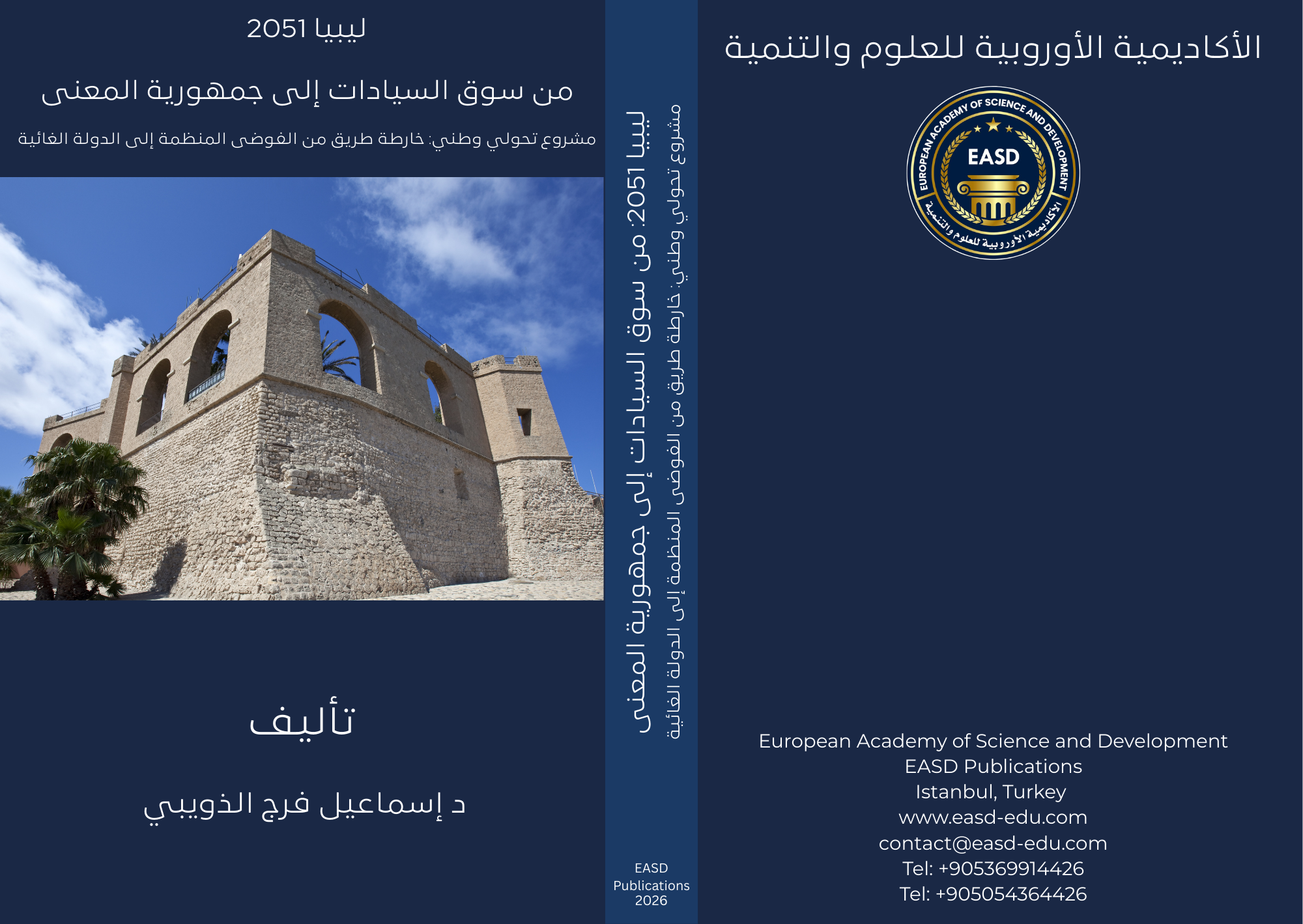
This book offers a profound analytical and forward-looking vision of the future of the Libyan state by deconstructing its current structure and reconstructing it within a transformative project extending to 2051. The work starts from a bold diagnosis that considers that Libya is no longer a failed state in the traditional sense, but has turned into what the author calls a “market of sovereignties”; that is, a competitive system in which power and resources are distributed among local and international actors according to the logic of supply and demand, where legitimacy is sold and loyalties are bought, and oil is transformed from a development resource into a political currency for producing influence.
The book does not merely describe the crisis, but uses advanced analytical tools such as network theory, political economy models of conflict, and strategic foresight methodologies to reveal the deep structure of the hybrid system that emerged after 2011. Through this dissection, it puts forward a central hypothesis that the transition from a “market of sovereignties” to a “republic of meaning” is not an ideal option but an existential necessity for Libya to remain an active state in the global system.
The Republic of Meaning proposes a teleological state model that derives its legitimacy from its ability to provide security, justice, dignity, and meaning for its citizens through the digitization of governance, the dismantling of rentier economies, and the restructuring of institutional incentives. The book also presents a timeline for this transformation (2025–2051) based on institutional regulation, followed by reconnection, culminating in a fully integrated digital sovereignty that transcends regional divisions and zero-sum conflicts.
The book is addressed to three circles: Libyans seeking a unifying national vision, the Arab world striving to understand the crises of transition, and the international community interested in new models for state-building in fragile environments. It is a practical call to move from managing chaos to designing the future, and from a power struggle to a national project that establishes a state that creates value, not consumes it.
Click the Download PDF icon below to download the book.
